
We want to be on the winning team, but at the risk of turning our backs on the losers, no, it is not worth it. So we fight the long defeat. Paul Farmer
When I am weak, then I am strong… Attributed to St. Paul
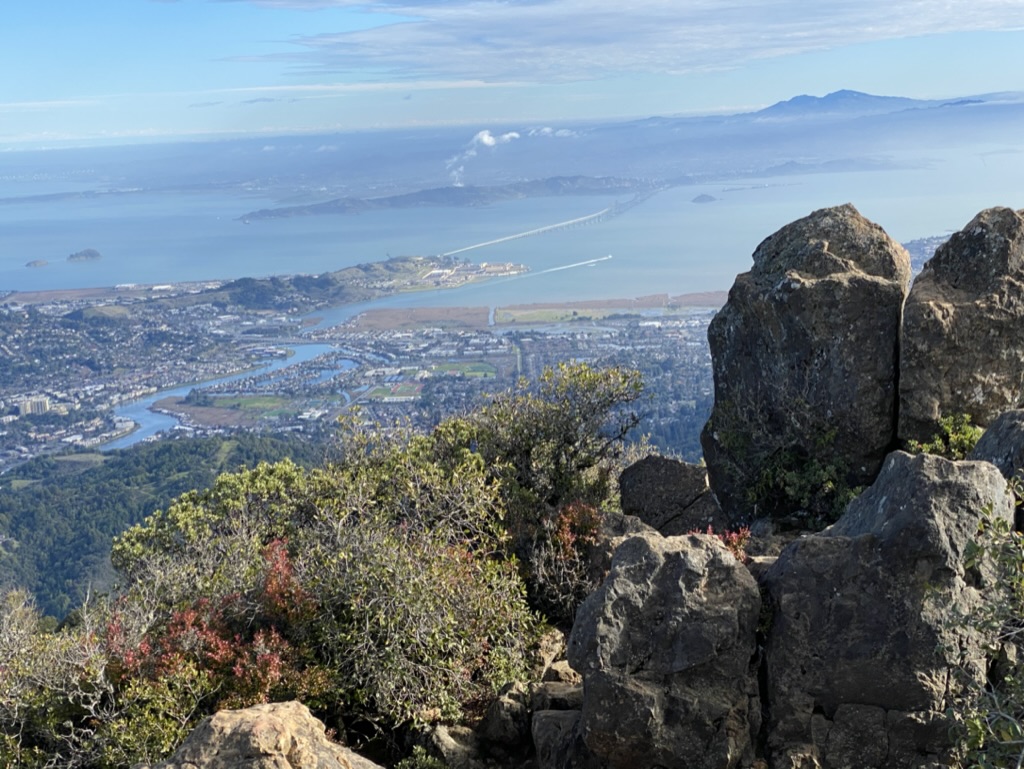
We skirted the side of Mt. Tam on a New Year’s Day that now seems so long ago (it has only been five years). That day’s bright, shining beauty could not suppress the knowledge that everything was about to change, to change in ways that we could not quite imagine.
I had been following the unusual pneumonia cases that were springing up in China. If one was paying attention, it was clear that this thing was coming. But what would it look like? No one knew.
So, on that day, I hid from my fears and merely accepted the possibility that everything would shift.
I felt powerless. I felt weak.
And then it came, and… Change is so hard. But in the moment, and moment by moment, we changed.
But in a sense, we did not change at all. We only became more of what we were.
I saw that for the first time just a few weeks later when I sat in our County Supervisor’s office. The county Health Officer looked at me and said, “This is our time. This is what we trained for. This is a time for who we are.”
And, we became more.
Though we were weak in the face of the onslaught of that novel coronavirus, though it often defeated us, and though, at times, we defeated ourselves, we became who we were. We did not turn our backs. We fought the defeat, and, sometimes, and in significant ways, we won.
The sense of weakness in the face of a natural disaster never left us. Our strength came in the weakness of knowing that we had to move on. And we did.
I feel all those things today…
Farmer’s “long defeat” was and is very much about what we see around us today. His long defeat was the realization that the wealthy and powerful would always end up on top and that the people he loved and to whose wellbeing he was committed would too often die terrible deaths or live diminished lives, while those same powerful folks would never, ever pay the consequences. Indeed, they would thrive.
And Farmer was saying, “So be it. I know with whom I will throw in.”
St. Paul was making a more explicit theological point—though the same stuff inspired Farmer. For Paul, weakness made space for the force of God to enter the fray (replace God with “the universe,” “good,” or “truth”—see also King’s “arc of the moral universe”).
But neither King, nor Farmer, nor Paul were pie-in-the-sky dreamers (nor were Dorothy Day, Fannie Lou Hamer, or Rosa Parks). All of these were people of action—not waiting for the arc, or truth, or God to intervene. No, this great cloud of witness embraced their weakness and the long defeat and became who they were—who they had to be.
The point is that the changes did not change them.
It made them more of who they were.
They simply lived into who they were, weathered the change—embraced the weakness, and fought the long defeat. And it was enough to change the world. But the change did not change them.
I take heart.
The changes are coming—indeed they are here. The powerful will crush the weak. The least will suffer. Hopes will be deferred. And the powerful will walk away from the carnage with their stature and wealth in place.
This is, after all, the long defeat.
But if we can move through the change and, yet, not change. If we can simply become who we are—more of who we are: people of love, compassion, persistent in doing good, supporting the weak, standing with the oppressed… If we can do those things…
Then our weakness will be strength, the arc will bend to justice, and the long defeat will turn to victory.
They have proven it.
It is our turn to live it.
 Traveling at the Speed of Bike