15. Smoking

Back then everyone smoked–even around the dining room table, out in the yard–in the kitchen for God’s sake.  Mom let them at that time but after we moved to our new house that all stopped.  Actually, they all stopped, eventually.  A couple uncles got emphysema, a few others heart disease, at least one lung cancer. The younger ones quit earlier and seem to be doing fine.  This was my extended family.  No booze but lots of smoke.

I remember when I saw my brother, two years older, smoking with some friends.  Made me feel sick to my stomach.  Smoking was okay for Uncle Don, but not for kids, like us.

There used to be a guy at the Reading Phillies baseball games (Double AA baseball, we had season tickets).  He was a very large man who would smoke these humungous cigars during the whole game.  I kind of liked the smell but as the evening wore on–long about the 7th inning–I always felt a bit sick.

I remember the last night they allowed cigarette advertisements on TV.  Sometime in the late 60s, I am going to say.  We stayed up late watching a movie and every commercial was for cigarettes.  I went to bed at 11:00 (it was a special treat to stay up that late).  My older brother stayed up until midnight when the test pattern came on.  He said after I went to bed it was one solid hour of cigarette ads.

The TV shows and most movies when I was a kid featured smoking.

The only time I really smoked in a semi-serious way was when I was doing my research in the Mauritanian desert.  It was exhausting work and all my research team members smoked and they convinced me that smoking would give me energy.  It did give me a buzz and a couple of times I threw up.  But… I did stay up later and get my field notes sorted out.

We knew way back that these things can kill you and I always wondered who invented this.  My dad said Indians did–they had peace pipes. But that still never explained how THEY got started.  Who thinks about inhaling smoke deeply into the lungs using a pipe or other means as a delivery system?

I used to think that people with cigarettes looked suave–successful marketing?

When we first moved to CA I remember billboards saying “Welcome to America’s Non-Smoking Section.”  Now it seems more people smoke everywhere.  They banned it at UC Davis, so people cross the street and stub out their butts on city sidewalks (Thanks UCD!)

Richie Allen once lit up a cigarette in the Philadelphia Phillies dugout.  I saw that and felt ashamed.  I knew Bob Gibson would never do that.  Athletes were supposed to be clean.

A propos to which, my mom always said that smoking was a dirty habit.

I have never bought a pack of cigarettes (though I purchased a “beedi” in India once for about a penny).  Yup, every cigarette I have ever smoked (about 50 I would say) was bummed off someone else.  I am not proud of that.

I can’t believe cigarettes are still around after all these years and everything we know. After the warnings on packs, the death of the Marlboro Man, and those awful ads showing very sick people telling us they wished they had never started.  I guess smoking will be around for the duration…

14. Anatomy of a Meeting

This 20/20 addition is different from the others.  Last night I did not have time to sit down and write my daily essay because I was chairing a meeting of the Davis City Council.  Even though this was not dedicated writing time, I actually spend a LOT of time over the 5-plus hours of any meeting writing.  I am taking notes on what staff says in reports (those I may not directly in my computer), but then when it is time for public comment on an item (and there is ALWAYS public comment in our town!), and when it is time for my colleagues to weigh in, I take summary notes that enable me to capture the sense of what is going on. 

My job, at the end of the day is to take in the public comments and analyze them in light of what I believe is best for the community.  My job is also to take the many comments from my colleagues and provde points of divergence, consensus and try to find a way forward to provide staff with guidance.

The summarizing of these views goes to the heart of what a mayor in our form of governance is supposed to do.  Yes, I get to speak my own thoughts, but they must be woven together with those of my colleagues to provide a coherent decision and pathway forward.

And so I offer you my notes from the meeting on an item related to oversight of police surveillance technology.  Every item on the agenda follows the same format.  Notes in red point out what you ae seeing.  This is all public.


13. Immigrant

Nothing puzzles me more–more genuinely confuses me–than the way US citizens, over many generations and places, have denigrated immigrants.  Nativist streams of thought ebb and flow throughout our history and the anti-immigrant fever is quite high in these days.  I do not know why.

Though I could be accused of being a liberal cosmopolite–rootless and therefore not valuing rootedness and “place”–I am actually a committed localist who believes one can only love that with which one interacts on a daily basis.  As such, I am not disdainful of the small town in which I was raised nor the small city in which I now live. And it is because I am a localist, I would argue, that I care so deeply about the immigrant.

I have not arrived at an understanding of the urge to “move” from studying the history of my own nation–though that is certainly instructive as we think about the role of the immigrant in shaping a place.  Rather, I understand it because I lived in a region of the world in which borders really can’t matter and people move across them in all directions, here seeking a better life, there finding a second chance, here joining a friend, there doing the work that locals somehow refuse to do.  In the economically-poor Sahel of West Africa movement is constant, little noted, and, from all appearances offering those on the move options they could not find at home.

I have traveled to the tiniest villages on the desert’s edge and found immigrants from many hundreds of miles away making their home there.  From those same villages (it might be hard to imagine how small and isolated they are, but trust me, you have never seen anything like it), stream others wandering far and wide to find their lives.

We are restless upon this planet and it is typically those most willing to take risks and the most entrepreneurial who choose to leave family and friends to wander into the unknown.  Beyond these are the talented many who are sent, proactively, from their villages to provide income streams or “premium” payments used for all manner of local “insurance” schemes that keep people alive in the most marginal spaces of the planet.

People move with intent.

And when they arrive they either fill or create and fill niches that were either empty or worthy of being created. My overwhelming experience of immigrants is that they enter a space and find opportunities in things that the locals either do not know how to do or will not stoop to do.

That is how I see those who toil in the fields, front lawns, hotels, and office buildings of Northern CA.  They take nothing from the locals but do keep prices down by their willingness to work long hours for low wages, little to no health insurance, and no other benefits.  They become parts of who we are–just like in every location in which I have found them around the world–they work their way into communities and become us.

As I listen to the rhetoric of those who see them as a threat in this time I wonder what is really driving the anger and disdain expressed towards them.  The angry ones hide behind dubious studies purporting to show the negative impact of immigrants. They speak of crime as if immigrants are an organized band of land pirates sweeping across the landscape to rape and pillage the land and the people.  They speak of the loss of cultural identity as if culture is an immutable good that is too fragile to rub up against difference.

When I hear their arguments I always wonder what exactly I am hearing.  But I think I know.  The words we hear in these days are a continuation of an ancient xenophobia. I focus on “phobia” here because I think there is a genuine fear of the “other” at play here.  Perhaps it is a fear of not knowing how to act around the other.  Perhaps it is a fear that their language hides threats that the native cannot decipher.  Maybe it is the fear the other really is more robust, more resilient, more capable than they.  It might be they fear the sheer stubbornness, the silent suffering under burdens of work, the spartan lifestyles, and the amazing grit they see in the faces of the immigrant.  Maybe they fear they are not made of that stuff.

I don’t know for sure.  I will forever speculate and wonder at these fears. To know an immigrant is to know someone who has taken a chance to move beyond the known to sow a seed in an unknown soil.  They are welcome in my home because they have helped enrich the place I call home.

12. What Stephen King Taught Me

Should I be ashamed to admit that I love the work of Stephen King?
I came to King late and, for many years hid my enjoyment of his work.  Why?  Well, I mean, is it really considered good taste to enjoy the purveyor of the horror genre?  But King is a masterful storyteller and when my niece, who teaches English and writing, proclaimed her admiration for his work, I decided I need not hide my guilty pleasure any further.

The truth is, King surprised me in so many ways when I really started spending time with him that I found my preconceived notions of what he was about–these largely informed by watching movies made from his books, Carrie and The Shining notably–shaken from the first read.

I started with his short stories written under the name of Richard Bachmann when he was a much younger man but my true introduction to King was when I read It. I consumed it over the course of a longish weekend and, another admission, I found my throat shrinking and my eyes watering when I read the last 10 pages.

I won’t run through the story at all because you should find it yourself (or just go watch the new movie based on it–haven’t seen it myself and can’t decide if I should), but I will say that it shares a theme or themes found in many of King’s books: themes that make one yearn for simpler things but also remember the joy of being a child, before life got too complicated, and friends WERE the center of everything.

King returns again and again to ideas of friendship in which love is discovered and expressed.  He sides with the misfits and the neglected.  The greatest horror in King’s writings on these things is the true, non-supernatural, violence done to our protagonists’ parents, school bullies, or power-wielding teachers or cops.

Horror may find its home in the face of a clown for the purposes of the story but we know it stands in for the very real horror that lurks relentlessly in schoolyards, bedrooms, and streets.  These pedestrian horrors–including simple neglect, the dehumanization that comes from adults who simply do not care about their children and from people who ignore those in closest proximity to them–dominate King’s narratives.

And, driven out by the neglect, King’s characters end up on the edges, on the borderlands, where, as King will tell you, a different kind of evil lurks.  The edges, both metaphorical and real in King’s work are where things break down, passageways to unimaginable hurt lie and people slip into other worlds from which many never return.

His characters find themselves in these spaces but… not alone.  Invariably, whether in a prison exercise yard (harder to get further out to the edge than that), an abandoned building, an unused sandlot, an inaccessible hotel, or a creekside hideout, they find others.  These others are beautiful in their own tragic stories and as they come together the true magic of King shines through. It does so because they always find love, and acceptance and they discover what it means to matter to someone else.

King’s stories are love stories.

I like the movie better than the short story upon which it is based partly because of the last words spoken by Red in The Shawshank Redemption.  They capture perfectly the lesson King sees in these shattered lives that find another or others and their lives gain a meaning they could never have believed they had.  King teaches me hope.

I find I’m so excited I can barely sit still or hold a thought in my head. I think it is the excitement only a free man can feel, a free man at the start of a long journey whose conclusion is uncertain. I hope I can make it across the border. I hope to see my friend, and shake his hand. I hope the Pacific is as blue as it has been in my dreams. I hope.

20/20 (20 minutes of writing for 20 days): 11. The Voices I Hear

I am going to write this one as an elected official: the identity that will follow me for a few more months and then be gone.

This is about the voices I hear, and how they affect my decisions.  I don’t often reflect on this but recent events have caused me to wonder about the decisions I make and who influences them.  Ours is a representative democracy. We DO have direct democracy options for just about anything that people will put their minds to make happen, but the normal course of decision-making means that five elected officials collectively make decisions that will affect the lives of 70,000 others.  As one of my colleagues notes: the power is not in one person but in the collective voice of five people.

In that sense, the decisions I make have very little force.  But in putting forth my ideas, my perspectives, and my arguments for a given course of action, I am seeking to influence the direction of a decision. In that sense, the voices I hear, and how they influence my decisions do matter.  So, to whom do I listen and how do I use that information?

Answering that is not as easy as it might appear.  But let me try to name the sources–the voices I hear.

  1. I hear the voices from my past–especially those that have brought me to this point.  I hear the voice of my mom, first and foremost. Her exhortation to be fair, to be wary of the powerful, to be honest… Her voice is in my head every day on these and other matters.  But there are other voices from my past who speak to my mind: my friends from West Africa who tell me about the importance of taking time with people; my Ph.D. advisor who tells me to give time to students–to keep learning from those who are experiencing the full joy of learning; my colleagues in the field of maternal and child health who tell me to seek evidence for the effects of programs and policies I support… And there are many others whose words remain in my mind and heart.  I listen to them.
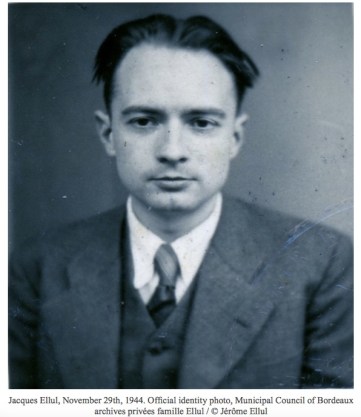
  2. I hear the voices of columnists and writers I admire and seek to emulate.  Ellul is a constant voice, as is Howard Zehr, Dean Baker, Wendell Berry and Andrew Bacevich.  These voices continue to inform and shape that thing called “world view” and there are many others that would require more space.  Each of these adds an element to how I approach the framing of what I see and how I choose to act.
  3. I hear the voices of City staff.  These are the people most closely associated with the decisions I am asked to make and I rely on them to help me understand the issues and the options for dealing with them.  These folks have a thankless job because there is rarely agreement from all quarters on the recommendations they make.  But they continue to make them and when I push and probe and prod them they always come through with their best, considered, opinion on the matter at hand.  I don’t always agree–but their voices matter a great deal to me.
  4. I hear the voices of passion from people across this community on nearly all the major issues that come my way.  I have never, in my three-plus years in office, refused to meet with someone who wanted to share a perspective with me.  I have never deleted an email without first reading it and considering its import.  These voices are as varied as the issues and they can be cacophonous as well. There is no way to arrive at a place of consensus among them but they provide a FULL array of perspectives that force me to consider where I stand.
  5. I hear the voices of my colleagues on the City Council who share the responsibility to decide with me.  Each brings his/her own voice to the dais and together we seek–in that very public space–to come together to make decisions. Laws limit how many of their voices I can hear outside the meetings on any given issue.  And so I often only get to hear these voices moments before a decision is made.  But I value these voices because they come from people who are walking a very unique path with me.
  6. I hear the voice of my life partner–my wife.  She does not get into the policy issues but she does provide me with a perspective on what matters most.  She is a voice that reminds me that I have not failed just because the latest angry email says I have.  Her voice tells me to stick with it, stop being such a baby, and, most importantly that she loves me.

I am sure there are others I have not named here.  I am sure there are others who influence me in ways of which I am not even aware.  I am sure that I favor some voices over others.  But when I pause to consider any decision I make, I realize that the voices I hear are varied and provide the grist that turns thoughts into actions.

20/20 (20 minutes of writing for 20 days): 10. Musings on Restorative Justice: Repentance and Forgiveness

These are musings.  Random thoughts that have flitted through my mind today, just like yesterday.

The idea of restorative justice has been around for many years but five years ago it was barely discussed in this town.  Today we talk about it a great deal but I doubt that many understand it.  Part of that is because we are so deeply bound by the precepts of our punitive system that even when we say we want justice–true justice–we usually mean that someone “has to pay.”  Who has to pay becomes a matter of perspective–of which side of the political or other “fence” you sit on.  We want restoration for us. We want punishment for them.

We have a long way to walk before we can shed the skin of our punitive system, the outcome of which is really a belief (deeply ingrained) that if we can just remove “them” from our midst, then true justice will prevail.  But restorative justice means just that: we restore people.  We restore them to their families, to their community, to their lives.  This does not mean that we restore them without some change or correction being made.  But, we seek restoration because we realize that if we send them all away we will end up with shattered and broken communities.

Yes, restorative justice does demand certain things: acknowledgment of harms, statements committing to change, and actions that demonstrate that change.  Restorative justice is rigorous in its defense of truth and truth-telling.  It is unrelenting in its search for harms and making those harms right (as much as possible).  It is rigid in its commitment to change on the part of those who have created the injustice–the broken relationships. But it fundamentally does not accept that driving people out will lead to a healthier and safer community.

Yes, we have a long way to go.

Restorative justice requires repentance but it does not need forgiveness.  This might seem odd: repentance but no forgiveness.  The equation seems so unbalanced.  I confess and you forgive… Isn’t that the way it should work?

Perhaps restorative justice is more pragmatic than we think.  When I say it requires repentance I use repentance in the sense of turning around or turning away from that which is wrong and turning to a new path–a new way of being in the world.  That is repentance: accepting to go in a new direction away from that which is hurtful.  Repentance is what offenders do in restorative justice.  They acknowledge that the path they have taken has led to harm and they seek a way, with the input of the one they have offended, to take a new path, a different path, a path the end of which will not lead to further harms to others.

But forgiveness is NOT what victims do in restorative justice.  Forgiveness is a result that may come, but it is not required of those who participate in this form of justice.  There is, perhaps, some confusion about this point.  The victim or victims in a restorative process–and can we acknowledge that in some cases one can be both victim and offender–or is our thinking simply too binary on this point?–the victim names what they need from the offender.  They name what hurt them. They ask questions.  They seek answers.  Above all, they search for a way beyond the fear and doubt, common to all victims, that maybe, just maybe it was something THEY did that led to all of this.  They seek escape from the fear that they will be victims again. They seek assurances, from the offender, that the offender will NOT inflict the same horror on others.

But they do not forgive.  Or, rather, they are not expected to forgive.  But like anything else when humans rub up against each other in pain and discomfort, they tend to do what humans seem programmed to do: they cast a lifeline into the sea of their pain and their deepest fears and they rescue the offender from their own inhumanity.

Does this always happen?  Perhaps not.  Does it happen often?  Yes.

For we all know–intuitively perhaps–that in our hearts there is an evil that dwells.  A hatred.  A malice.  A destructive force of anger.  And we know that if ever we were to flounder in someone else’s sea of fear and pain, that we, too, would want a lifeline.

20/20 (20 minutes of writing for 20 days): 9. Further Thoughts on Police Oversight

Back home after a time of deep reflection in Spokane concerning police oversight.

I came away thinking about trauma, means and ends, technique (the blind search for the most efficient/one best way), the fear and liberating force of transparency, and whether the vision for oversight might really be about creating a wholly new way of thinking about policing. Since I already discussed trauma, let me focus on the other elements here.

When I ran for office in 2013, I never suspected that I would be spending much time on matters of policing and police oversight.  But the realization that police forces across the country were militarizing, and the subsequent events of in Ferguson, Dallas, Baltimore, and, yes, Davis have made oversight a seemingly all consuming challenge for me today.

Six months ago, I had never heard of NACOLE.  Six months ago the “Picnic Day 5” was not a thing.

When the Davis Police Department obtained a mine-resistant armored (MRAP) vehicle just over 3 years ago, I reflected on the fact that the MRAP was a “means” in search of an “end.” I noted the insidious nature of “means” that purported to provide security:

We are in a situation in which a given “means” is purported to provide security while at the same time embodying humanity’s destructive power. I am talking about the military vehicles we willfully bring into our community to enhance our “security.” Said vehicles would not exist were it not for the creation of wars that have no other purpose than to solidify power and secure limited natural resources for the benefit of a minority of the world’s population.

These prodigious means (created by the narrow pursuit of the “one best way” of solving narrow technical problems) are utilized without reference to who is ultimately responsible for their application. As Jacques Ellul noted: “personne n’est responsable” but, “personne n’est libre”—no one is responsible, but no one is free (of responsibility).

Interestingly, the issue of means and ends was central to the discussion of things like the use of force, military equipment and the setting of policies on such matters.  As Kevin McMahill, Undersheriff, Las Vegas PD said: “Looking back, I can’t believe that before 2010 our use of force polices did NOT include as a primary commitment the sanctity of life and that we did not have deescalation within the policy. It seems so strange now that these things were not there.”

What McMahill was talking about was means without ends: policies that do not ask the question of what we want to achieve but offer a series of “best practices” nonetheless.  His comment represents a kind of awakening in which he started thinking about the ends of policing: preserving life and enhancing community (among other things) and the means that should flow from those ends–to help accomplish them.

Perhaps we have come some distance since the time when police forces merely accepted violent means without reference to the ends they are meant to achieve.  Indeed, the whole conversation about oversight in which McMahill made these comments concerned the police as “technicians” (not his word) who have always made policy as the experts.  McMahill and the others on the panel with him agreed that it was time to open up the conversation on policy formation and set policy based on the ends the community wants to achieve; involving the community itself in such conversations.

The implications of this approach are fairly radical because when the technician allows him/herself to be judged, then technique loses its power and we move towards considering the human need within the policy; not merely the most efficient or “one best way” of the technician.  In fact, the panelists that day noted that opening up policy formation to a broader community discussion is NOT efficient at all.  But it is necessary, they said.

Could it be that the police themselves will lead us out of our enamorment of technique?  The thought is jarring, but perhaps not all that far fetched: in no other public affair has the utter failure of technique become more apparent than in policing.  Our police have obtained the most sophisticated equipment but they remain estranged from their supposed role as “peace officers.”

And so, there is an introduction of transparency in the, frankly, mundane but critical arena of policy making as it concerns our police.  For, make no mistake, policy formation done with public scrutiny, while messy, no longer lives in the shadows–the sole purview of the “experts.”

But there is a further transparency that was on display in the discussions this week.  This transparency concerns the revealing of information from police actions.  Speaker after speaker across nearly EVERY presentation remarked on how fearful the police were when leaders proposed releasing more, and more comprehensive, data on stops, violent encounters, complaints, body-worn camera images, and other details of day-to-day policing.  And each and every one stated emphatically that the fears had not been borne out.  The greater the revelation, the better community relations had become in each case.

Does any of this imply that we are on the cusp of thinking in wholly new ways about what it means to be a policeman and what policing entails?  I am not sure.  But when I hear technique challenged by the technician; when I hear people who might otherwise fear disclosure talking about how freeing it can actually be; and when I see leaders speaking frankly about the need to define and achieve clear ends–clear human ends… Well, then I think the enthrall of technique has been broken and we can talk about truly human thriving and truly human policing.


20/20 (20 minutes of writing for 20 days): 7-8 Our Police, Ourselves

When I send my officers out each day I say to them “Just come back alive.  Make sure you come back.” (pauses) I am not sure that that should be my biggest concern but that is what I think about every day.

Police Captain at a community forum on policing


I have two adult male children—brown children.  When they leave the house, I say “Be careful out there.  If you get stopped by an officer get down on your face. Do not give them any reason to harm you.  I want you to come back to me.”

Staff Member of a Community Police Commission in a large metropolitan area


And so, this is where we are: the police and the community encountering one another in fear.  I am not sure what good can come of this. 

I participated in a fascinating forum about “trauma-informed law enforcement” and before it began I wondered whose trauma we would be discussing: victims of crime, police, or other community members?  It turns out the conversation was about all three, and I left wondering if trauma-based analysis might, perhaps, point to a way out of the mutual fear, and the attendant hostility that seems to be a growing feature of our police/community encounters.

Listening to officers and then community members, it seems that it is not popular to acknowledge the needs of the “other” side.  Officers want compliance from community members so they can go after the bad people; community members want to reign in police forces that are out of control.

I know—this is an over simplistic dichotomy, but this is how I experience the discourse on policing today.  And maybe the dichotomy is not too simplistic if one considers the sources and content of the quotes above.

So, let’s talk about trauma.*

Many (if not the majority) of police encounters with community members include some form of trauma. After all, people call the police typically when something has gone wrong.  Victims, by definition, have experienced a traumatizing event. Even small crimes against people or property can leave people feeling vulnerable and wondering if it will happen again. The more serious the crime (or even a close encounter with such crime) the deeper the physiological response; a response that can be debilitating in the short and longer term.

At times, the trauma is caused by the encounter with the police officer itself.

At times it is long-term, carried by community members because of adverse childhood experiences or ACEs, exploding in violence against others or self-harm.

Officers too experience trauma.  They experience it in the often-horrific stories they hear time and time again from victims, from threatening experiences, from viewing dead or severely injured human bodies, and from pulling up on a call with uncertainty born out of vague descriptions of what they are about to encounter (man in possession of multiple weapons, shooting victim with unknown injuries, etc.).

And so, we find ourselves in a situation in which it is not unusual for BOTH parties in a police/citizen encounter to be experiencing, or having had experienced, trauma—acute or chronic. We are learning more about what trauma can do to a person in terms of actions and reactions; responses to trauma are rarely “healthy” or neutral.

A few anecdotes on trauma from the (female, African American) Supervisor of the Cambridge, MA Police Department:Sometime

  • Not long after having experienced the Boston Marathon bombing and subsequent manhunt for the perpetrators, a report came in of an active shooter at MIT. The description on the call included information that the person was heavily armed and moving from room to room shooting people.  Upon arriving at the scene and preparing for action, the police learned that the whole thing was a hoax.The Supervisor went on to describe what happened next: the officers were sent back out on duty.  There was no debrief.  There was no processing of their state of mind in the buildup to the action they were about to undertake.  There was no discussion of their needs. Compassion requires us to ask, I believe, what each of us would do were we to find ourselves in such a situation and what our needs might be afterward.
  • In the aftermath of police shootings around the country, and then the shooting of police officers in Dallas, a Black Lives Matter coalition held a prayer rally in Cambridge. Participants were feeling the secondary effects of events that were difficult for the entire nation, and many at the vigil had experienced negative and, arguably, traumatizing encounters with the police themselves. And on that day the police too were feeling vulnerable, fearing a copycat action.  Though there was no intelligence to this effect, the police heavily armed themselves and brought out an armored personnel carrier into the streets. Trauma and fear, facing trauma and fear.  The Supervisor, to her credit, acknowledged how wrong-headed the police response was.  She shared the reaction of community members participating in the vigil who timidly approached the armored “tank” and knocked, inviting the officers to come out.  They wanted to know whether the police were actually expecting violence and whether there was something they should know.

These anecdotes could be and are being repeated over and over in communities across the nation.  Police in my own town, after obtaining a mine resistant, armor-protected vehicle (MRAP), expressed their conviction that such an object was necessary to protect them in a variety of (largely hypothetical) situations.

These stories are not about Cambridge they are about us.

I share the first anecdote to remind us that our police, while granted significant powers and a monopoly on the use of force, are humans.  They face trauma and, arguably need help in dealing with it.

I share the second anecdote to help explain why things seem to go wrong far too often in encounters between officer and community members.  Can we understand these things?  Can we acknowledge that we are dealing with real human problems that must be addressed?

And so, I am thinking about these things.  I am thinking about them particularly in the context of civilian oversight of police and I conclude, at least partially and at least initially, the following:

  1. We have a lot of work to do in deepening our understanding of the causes and effects of trauma. Initial work on ACEs shows that childhood trauma lingers into adulthood affecting both mental and physical health outcomes. And while we seem to be finally acknowledging the reality of PTSD in former military personnel, I wonder if we are prepared to extend that acknowledgement to police officers (and other first responders).
  2. Police need tools to engage victims with a deeper understanding of trauma. This is important, not just for cases of domestic violence and sexual assault (logical places to start—but where there has been VERY little done to date), but for encounters with all victims of crime, and victims of police abuse. By tools, I am talking both about how officers and investigators approach victims—are they merely a means to the end of capturing a perpetrator?—and how they engage them in conversation.  In other words, do police officers know how to interview and treat victims to help them feel safe, protected; offering them options for what they might do now that a crime has been committed against them?  This is an emerging field and one that merits attention.
  3. As a community, we need to view crime itself through the lens of trauma. We are so careful to NOT want to excuse crime and bad behavior. I get that.  But I fear that we lack compassion for perpetrators of crime.  We assume things about them and their motives without a passing thought of the role that trauma might play in their actions.  This is a domain in which restorative justice and processes can really help us.  I understand the hesitation of going down a path that would seem to excuse bad behavior in the name of justice, but given what we know, how can we not take the time to seek accountability on the part of those who commit crime, while acknowledging the real-life challenges they often face?
  4. As a community, we need to view police behavior itself through the lens of trauma. We are so careful to NOT want to excuse the abuse of power by the police. I get that.  But I fear that we lack compassion for police officers, perhaps BECAUSE they have so much power. This is a domain in which restorative justice and processes can really help us.  I understand the hesitation of going down a path that would seem to excuse the bad behavior of police officers, but given what we know, how can we not take the time to seek accountability on the part of those who abuse their positions, while acknowledging the real-life challenges they often face?

Perhaps what I am suggesting, and I have not fully played this out in my mind, is that trauma-informed law enforcement must go hand in hand with trauma-informed police oversight.  The question must always be: “what will lead to just outcomes and healing in our communities?”

I invite feedback on these issues.


*  Definition of trauma from the American Psychological Association: Trauma is an emotional response to a terrible event like an accident, rape or natural disaster. Immediately after the event, shock and denial are typical. Longer term reactions include unpredictable emotions, flashbacks, strained relationships and even physical symptoms like headaches or nausea.

References:

James Johnson, August 11, 2016 Washington Post “There’s trauma on both sides of the police-community relationship.”

www.acestoohigh.com – good resources on adverse childhood experiences (ACEs)

Donna Kelly and Julie Valentine The Science of Neurobiology of Sexual Assault Trauma and the Utah Legal System (discusses trauma informed interview techniques to be used by police officers and investigators)


20/20 (20 minutes of writing for 20 days): 6. The Run (Redux)

Note: One of the things I wanted to do during this 20 days of 20 minutes is to go back and rewrite some things I had previously written.  So, while the following is not new content, I hope it is better than the piece I wrote years ago…  And, since I had a GREAT run today, this is the rewrite I decided to work on first.


I am a runner. And as all runners know, there are a few runs over the course of time that stand out as “epic.” The runs that fly by, effortlessly, heart beat kept in check, muscles never tired. I can count on one hand that kind. And this was one.

I arrived in just another foreign city for work after an endless flight (20 hours or more was never unusual back then). And, as was almost always the case in the last years of my travels, I really just wanted to go home. The flight and the taxi ride from the airport were blurs of drowsy half sleep; again, as always.

As was my practice, I arrived a few days early to have some time to walk the streets and get settled in. Still… this particular trip was different. I apparently had a whole day to myself.

So, when my hosts, who were aware of my love of running, invited me to run with a few of them on a tour of the city, I agreed with real excitement. I was excited because some of my best runs ever were during times when I was jet-lagged beyond description (like that run from the canyons south of SLO to Avila Beach after the 24 flight from India—8 miles that flew by on a sprint from the hills to the sea along the California coast).

Anyway, they encouraged me to tag along and suggested that it would be a great way to get to know the city.  I was too tired to remember other runs I had had in that place and, frankly, was so fried I was not even thinking about where I was.

There was only one caveat: we were going to a “rough part of town” and they needed to clear it with a seasoned runner (run club leader?) who knew the terrain. Apparently, he was going to “approve” me (or not). Though marginally irked that I might not be able to hack it (I mean, dammit, I had already run in about 30 different countries and was in great shape), I was also cognizant that he may not want to drag someone along who was going to wimp out after a couple of miles in a difficult environment. I counted on my colleagues (though I must say that I did not really know them all that well) to smooth the way with the run leader. The fact that they seemed unconcerned about my “fitness” put me at ease.

They picked me up before the sun (I had been up for hours already—again, jet lag) and we headed off to meet the others. We arrived in a part of town (I never really followed the route—why should I, I was with them?), away from where I arrived and they led me into a small room. I knew that the town was poor and “broken down”—I would not have been there if they had NOT needed “development” (right? I mean, that was my job). The runner/leader entered soon after (we were about 6 in all) and sidled by. He seemed to pay limited attention to me but, kind of dismissively, acknowledged my presence and indicated I was “good to go.”

But I was caught up short. The leader seemed to take me in from “the side.” He never really looked at me but kind of caught me from a peripheral glance. I know it sounds strange but… he did not see me at all.

He was blind.

At least “legally”. He wore no glasses but I knew immediately that he could not see (at least in the way I was used to seeing).

But, I was approved and I figured that one of the group was going to guide him on the way. I have seen stranger things. I have known “blind” people who ride bikes (and even a few who drive—during the day), so the fact that he was in that state was not alarming. More a curiosity than a concern.

We headed out soon afterward and what did shock me a bit was that he led the way. I mean, no one guided him, verbally or otherwise. He was on his own but clearly knew the way. Strange but kind of cool. The minute we left the building where we had all met up I realized that the city was both new and strangely familiar to me.

(Look, when you have traveled as much as I have EVERY place reminds you of somewhere else, even as it is unique and strange. I can’t explain it beyond that.)

But this place was similar/unique in a different way. It was clearly a very poor place. Rubble was everywhere but it was also clearly not the rubble of war or conflict. No, this place was in decay. The broken walls, the crumbling houses, the piles of brick—they were not due to bombardment. Rather, the whole place was simply falling apart. Streets were clogged with broken concrete that had simply given way after years without maintenance. It was evident that houses had stood here but their walls had crumbled and their inhabitants lived in the open with little fire pits or stoves to warm their food and sheets (torn and tattered) strung up to separate “rooms” that lacked roofs.

There was a serene, sad, failure about the whole scene.

Our run through this landscape was with a quick pace and required nimble feet (glad I had brought my “trail runners”). The leader led the way without pause. I was, frankly, shocked that he could wend his way among this mess, this mass, without stumbling. I mean, the guy really was blind.

We followed and I was amazed that he seemed to know the path by heart and his foot never faltered though we dodged debris and the piles of what had tumbled. As we ran he blithely noted, here and there, the projects underway to fix this or that, to mend this wall, to rebuild this quadrant. I quickly ascertained that he was some kind of development expert who had been here for some time and had a vision for what was needed to turn this thing around. (I can’t really remember much about him—except that the others running with us seemed to treat him as someone who really knew the place and they seemed to be full of respect for him and his knowledge of the place).

He greeted lots of folks along the way and they replied with smiles. We ran single-file and all I remember is that we had to run single-file because the wasteland of that place was startling. I mean, this was as bad as I had ever seen. What “quartier” were we in any way? I would have to check into that later.

But my mind was troubled as we ran (Had we gone about 2 miles or more like 6? It was hard to tell, like any “new” run, this one held so much intrigue that I was really not keeping track).

Everything seemed familiar… everything different.

It reminded me of Kolkata where I had arisen at 4:00 am to run before the heat and had stumbled over bodies along the sidewalks. That was the time I had added up the cost of my running gear (shoes, shirt and shorts) and realized the value was way beyond the annual wage of the people who slept under the burlap sacks over which I stumbled on the sidewalk outside my hotel. But it was not Kolkata.

It reminded me of Ouagadougou, where I had run past the Presidential palace with guards who eyed me at 6:00 am, nervous, until I waved and we shared a “bon jour” and I breathed in the pre-dawn heat of a Sahel morning. The dust already up and mangoes awaiting me for breakfast. But it was not Ouaga.

It reminded me of Bay, on the main island of the Philippines, where the humidity strangled me after two miles and I gasped my way back to the guest house, sweat pouring from me for hours afterward as I doubted my heart’s ability to keep up. But this was not “Metro Manila.”

But it was one of those good runs. I never tired and my heart never raced (thanks, jet lag) and the leader kept up his commentary of how this was all going to change and the rubble was going to give way to clinics, and houses, and the end of addiction, and no more violence, and children without sickness (of mind and body) and… And I felt like I had never felt so nimble and free and I started wondering if I might be able to run forever and… I felt SO good. Like I said… One of THOSE runs (you know what I mean).

But the rubble was stacked up and I felt bad about the “brokenness” of the place. Like Haiti? Like Mazar es Sharif? Like the Townships?

The leader brought us to a halt on a small pile of rubble—a bit higher than the others. I was thoroughly impressed. This blind guy had led us across the busted terrain without a stumble. We breathed in the morning air. Feeling good. I was NOT tired and ready to go on.

From somewhere he brought out a kind of telescope—or eyeglass (“Where the hell did that come from?”—was all I could think). He asked me to have a look. I was going to ask those who had invited me whether we were going to be working here or somewhere else… but…

Then

I hold it to my eye and see the expanse of the city through which we have just passed to the south and east and west. It is far worse than I had thought. Things really are bad here (I often say that to myself on such trips). I look north (sun just starting to rise to my right) and see empty fields strewn with weeds. My heart aches. The productive capacity of those fields… But they sit fallow.

And then the telescope seems to invert.

And I am looking through the “wrong” end.

And I am rushing away from the fields and town and…

I look down at the Garmin on my wrist… Ten miles… Wow… Got “lost” in the run again.

Where have I been for the last hour and a half?

Mind drifting. Yeah.

I stop my watch. I am standing in front of my apartment, having crossed the ten miles of my town…

My reverie…

All so familiar.


20/20 (20 minutes of writing for 20 days): 5. NACOLE Day 1 Reflection

The annual conference of the National Association for Civilian Oversight of Law Enforcement  (NACOLE) started today in Spokane and I am fortunate enough to be here for it.  The following are some initial (random?) thoughts on what I saw/heard/experienced.

  1. This is the second time this year that I have attended, for the first time, a conference of a national association (the other was NAFSA–an organization focused on international education).  I am struck by the passion of long-term practitioners in each.  These are people who have, for the most part, spent long periods of their careers, focusing on how to make police more accountable to the communities in which they live and serve.  And, like other professional associations they are wrestling with how to create the highest standards of practice for their members.  There is something inspiring to me about the long-term commitments I see here.
  2. This association is interesting in that it includes a full array of local actors: government employees, citizen volunteers, police officers, elected officials (more on this below), attorneys, community-based organizations, consultants, academicians.
  3. Add to the foregoing diversity the representation from large and small cities and great racial diversity and this is, by far, the most diverse association meeting I have ever been to.  It is rivaled in my experience only by the American Public Health Association (which is much larger).
  4. I am one of three (that I counted) elected officials here out of about 450 attendees.  I assumed, given how prominent the issue of police behavior is in the news, that MANY more electeds would be here.  I would say that police oversight is one of the top five issues cities face in these days (housing/homelessness, escalating service costs, aging infrastructure, addiction, and environmental sustainability are some others).  I am surprised there are not more policy makers here.
  5. Police oversight is one of those issues where the solutions will ONLY be found via a broad coalition of actors.  We need to invite all these actors around the table and marvel at the unique contribution that each can and must make.  We must also recognize what each actor is not well positioned to bring to the table.  The key to success for Davis or any oversight process will be developing deep personal relationships among these actors.  This is the only way we will be able to build the kind of trust necessary to see us through times of crisis.
  6. Models of police oversight include focuses on investigation, civilian complaint boards, policy and practice review, and independent investigation review.  More and more cities are developing hybrid models that combine various of these domains.  Our public process in Davis is about defining what our model will be.
  7. A not insignificant number of people working in this field are former police officers.
  8. There is a big difference between helping police do their job better (the vision of some in this field) and creating transparency to build greater police accountability.  The latter is where the industry appears to be going–with a focus on police legitimacy.
  9. Big cities dominate this field with LARGE staffs dealing with complaints, investigations, hearings and policy development. A smaller town like Davis represents where oversight is moving.  I attribute this to the fact that policing is experiencing a national crisis and communities are trying to figure out how to take a preventive approach rather than waiting for a crisis to hit.
  10. Glad I am here.  I know I will return to Davis with my thinking enlarged and a more informed commitment to improving police oversight in Davis.